


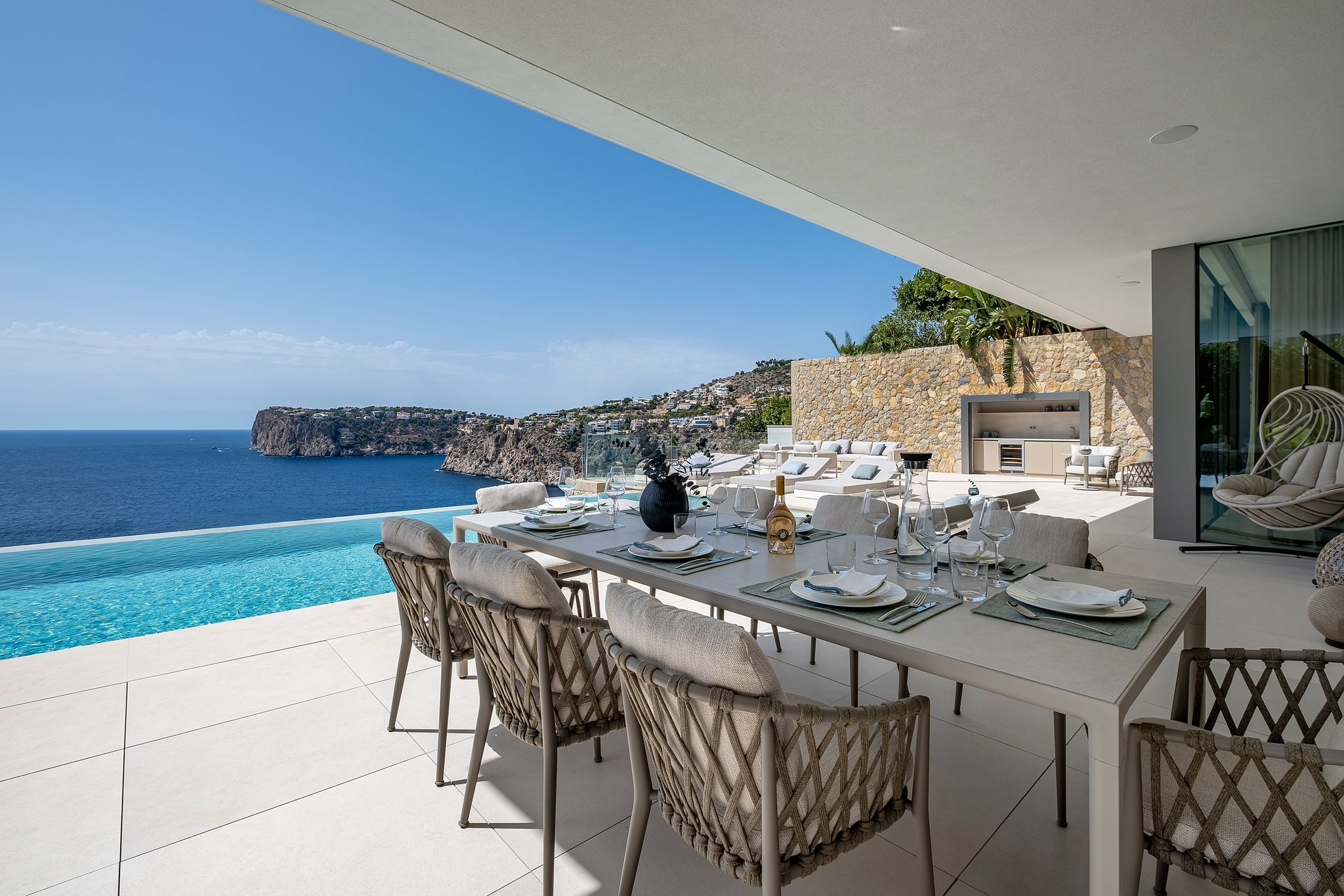
Purchasing a property in Mallorca is an exciting investment, offering access to the island’s unique lifestyle and stunning landscapes. At Rokstone Estates, we’re committed to guiding you through each step of the buying process, ensuring a seamless experience that aligns with your lifestyle and goals.
Understanding the Market
Mallorca’s property market is diverse, with options ranging from coastal villas and city apartments to rural estates. We advise clients to familiarise themselves with different regions on the island, as each offers its own atmosphere and advantages. Our team is here to provide insights and recommend areas that match your vision.
Financing and Budgeting
Before starting the property search, it’s essential to determine your budget, including purchase costs, taxes, and fees. For foreign buyers, obtaining a mortgage in Spain is an option. Spanish banks offer mortgages to non-residents, typically financing up to 60-70% of the property’s value. We can connect you with reliable financial advisors to streamline this process.
Legal Essentials
Navigating the legalities of buying in Mallorca requires local expertise. Spanish property law mandates that all transactions involve a notary and an official property registry. We’ll guide you in securing legal representation to ensure all documents are in order, helping you understand key aspects like title deeds, taxes, and property history.
Costs Beyond the Purchase Price
When purchasing a property in Mallorca, it’s crucial to budget for additional costs beyond the purchase price.
These typically amount to 10-12% of the property’s value and include various taxes and fees, which are outlined below:
Taxes Property Transfer Tax (ITP):
Applicable to second-hand properties. Tax rates are calculated progressively:
- 8% on the first €400,000
- 9% on the amount from €400,001 to €600,000.
- 10% on the amount from €600,001 to €1,000,000.
- 11% on the amount from €1,000,001 to €2,000,000.
- 13% for amounts exceeding €2,000,000.
The total ITP is based on the final purchase price of the property.
VAT (IVA) & Stamp Duty (AJD):
For new-build properties, buyers pay:
10% VAT on the purchase price.
1.5% AJD (Stamp Duty).
Note: Properties subject to VAT do not incur ITP.
Fees
Notary Fees
The notary certifies the sale contract and manages the transfer of property ownership. Fees typically range between €600 and €2,000, depending on the property’s purchase price.
Legal Fees
Legal representation ensures due diligence is conducted, verifying that the property is free from debt or legal complications.
Costs are generally 1% of the property value but may vary based on the complexity of the transaction. For non-EU buyers, additional legal services may include assistance with residency visas (fees ranging from €500 to €2,000).
Property Registration Fees
This fee is required to officially register the property with the Land Registry. Costs vary between €300 and €1,200, depending on the property’s value and size.
Mortgage Fees (if applicable)
Valuation Fees: A valuation is required to assess the property’s worth for financing purposes, typically costing €300 to €600. (only applicable if applying for a mortgage).
Arrangement Fees: Charged by the bank for setting up the mortgage, usually around 1% of the loan value.
Broker Fees: If using a mortgage broker, additional fees may apply, typically ranging from €500 to €2,000.
Mortgage Deed Fees: Cover the notary and registry fees specific to the mortgage deed.
Annual Taxes IBI - Impuesto sobre Bienes Inmuebles (Council Tax)
Equivalent to property tax, calculated annually based on the property’s cadastral value (official valuation).
Typically ranges between €300 and €2,000 per year.
Basura Tax (Rubbish Collection Fee)
A local council fee for waste collection, usually ranging from €150 to €250 annually, depending on the property’s location and size.
Summary of Additional Costs:
When budgeting for your property purchase, consider the following typical cost breakdown:
- Taxes: 8-13% ITP or 10% VAT + 1.5% AJD (for new builds)
- Notary Fees: €600 - €2,000. Legal Fees: ~1% of property value.
- Property Registration Fees: €300 - €1,200.
- Mortgage Fees (if applicable): Vary depending on the loan amount and services used.
At Rokstone Estates, we provide clients with a detailed estimate of these costs upfront, ensuring complete transparency and helping you plan
The Buying Process
- Property Reservation: Once you’ve chosen a property, a reservation agreement and deposit secure it while due diligence is conducted.
- Due Diligence: Your legal advisor will verify the property’s status, ensuring it’s free of debt and compliant with planning permissions.
- Sales Agreement: The private contract outlines the terms, and a deposit of around 10% is paid.
- Completion: The purchase is finalised before a notary, who will register the sale. The remaining balance is settled, and keys are handed over.
Embracing the Lifestyle
Mallorca is more than a destination; it’s a lifestyle. From world-class dining and outdoor activities to cultural heritage, each property we offer provides an entry point to Mallorca’s unique charm. Whether you’re seeking a peaceful retreat or a vibrant community, we ensure your new home aligns with your lifestyle aspirations.
Start your property journey. Contact Rokstone Estates Today
Owning a property in Mallorca is a journey we’re excited to take with you. Contact us to discuss your goals, and let’s make your vision a reality.


